
Every few years a format gets rediscovered and the coverage arrives all at once. This summer it was the compact disc. The headlines were right about the numbers and mostly wrong about what they meant, so here is the version from a shop that actually buys and sells the things.
Why Are CDs Making a Comeback in 2026?
The short version
CD sales are growing again, but this is bigger than nostalgia. Younger buyers are returning to physical media, ownership is starting to matter again after years of streaming everything, CDs are cheap compared with vinyl, and an enormous amount of music from the 1990s and early 2000s still exists only on disc. Even the old argument that CDs sound worse than records turns out to have far more to do with mastering than with the format itself.
- CD sales are growing again →
- Why physical media feels different now →
- Why some old CDs really did sound bad →
- The music you still cannot hear anywhere else →
How Much Are CD Sales Actually Growing?
Yes, and two separate industry datasets now say so. Luminate's 2026 midyear report put US CD sales up 16 percent to 16.3 million units in the first half of this year, against 2.4 percent growth for vinyl. It is not purely a K-pop story either, though K-pop is a real part of it. Strip those releases out entirely and CDs were still up 6.7 percent.
The RIAA's midyear revenue report, released on September 1, comes at it from a different direction and lands in the same place. CD revenue was up 58.6 percent year over year to $171.1 million, on 17.5 million units. Vinyl revenue grew 17.7 percent. The two organizations measure different things, which is why their unit counts do not match exactly, but both have the compact disc moving in a direction it has not moved in about twenty years.
Now the context most of the coverage skipped: vinyl is still the far bigger business. That same RIAA report has vinyl at $543.8 million on 26.5 million units, more than three times what CDs brought in. CDs are growing faster. They are nowhere close to overtaking records, and anyone telling you otherwise is reading a growth rate as though it were a total.
It is also worth saying plainly that one strong half year is not a trend. CD revenue fell in 2025, the same year vinyl cleared a billion dollars. Some of this year's jump may well be down to a handful of blockbuster releases. Worth asking again when the full year numbers land.
Then there is the detail that got written up everywhere as a curiosity. Roughly half of the Gen Z and millennial buyers driving this growth do not own a CD player. Most of the coverage treated that as proof the whole thing is a fad, people buying objects they have no way to use.
We would read it the other way around. If somebody buys an album knowing they cannot play it, then the object itself and the act of owning it are the entire point. That is not a footnote to the story. That is the story.
The Bigger Story Is Owning Something Again
The CD comeback makes a lot more sense when you stop looking at CDs by themselves.
Vinyl has been growing for nearly two decades. Cassettes came back from the dead. Used DVD and Blu-ray collecting has a real audience again. Film cameras, wired headphones, printed books, physical video games and every other supposedly obsolete thing keep finding younger buyers. Some of that is nostalgia. Some of it is fashion. But there is something else underneath it.
People are starting to remember the difference between having access to something and actually owning it.
Streaming gave us almost every song ever recorded in exchange for making almost none of it ours. Your music library became an account. Albums appear and disappear when licensing changes. Versions get quietly replaced. Apps change, prices go up, and recommendations increasingly decide what comes next. You can listen to practically anything while possessing practically nothing.
This is not only a feeling, either. A 2024 UK survey by Key Production found that 59 percent of 18 to 24 year olds listen to vinyl, CDs or cassettes at least once a week, a higher share than any older age group, all of which landed between 40 and 45 percent. Asked why, younger buyers keep giving the same answers across completely unrelated categories, from records to film cameras to secondhand clothes. They want something tangible. They want to own it outright rather than rent access to it. And they want some time away from a screen that is always queueing up the next thing for them.
A CD is a funny object in that context, because it is still digital. There are plenty of ones and zeros on it. Nothing about it is analog in the way a record is. What makes it feel different in 2026 is simply that the ones and zeros belong to you.
You buy the album once. It sits on a shelf. Nobody can pull it out of a catalog. You do not need a subscription, an internet connection or permission from a platform to play it. There is artwork to look at, credits to read, and a deliberate decision involved in choosing what goes into the player next.
That is probably a good part of why physical media has started to feel less old fashioned and more appealing again. When everything else is becoming temporary, rented, algorithmic and invisible, an object you can hold onto starts to feel strangely modern.
And the CD may be unusually well positioned for that moment. It gives you most of what people like about owning records without asking for a $35 reissue, a carefully aligned turntable and half a living room to store the collection.
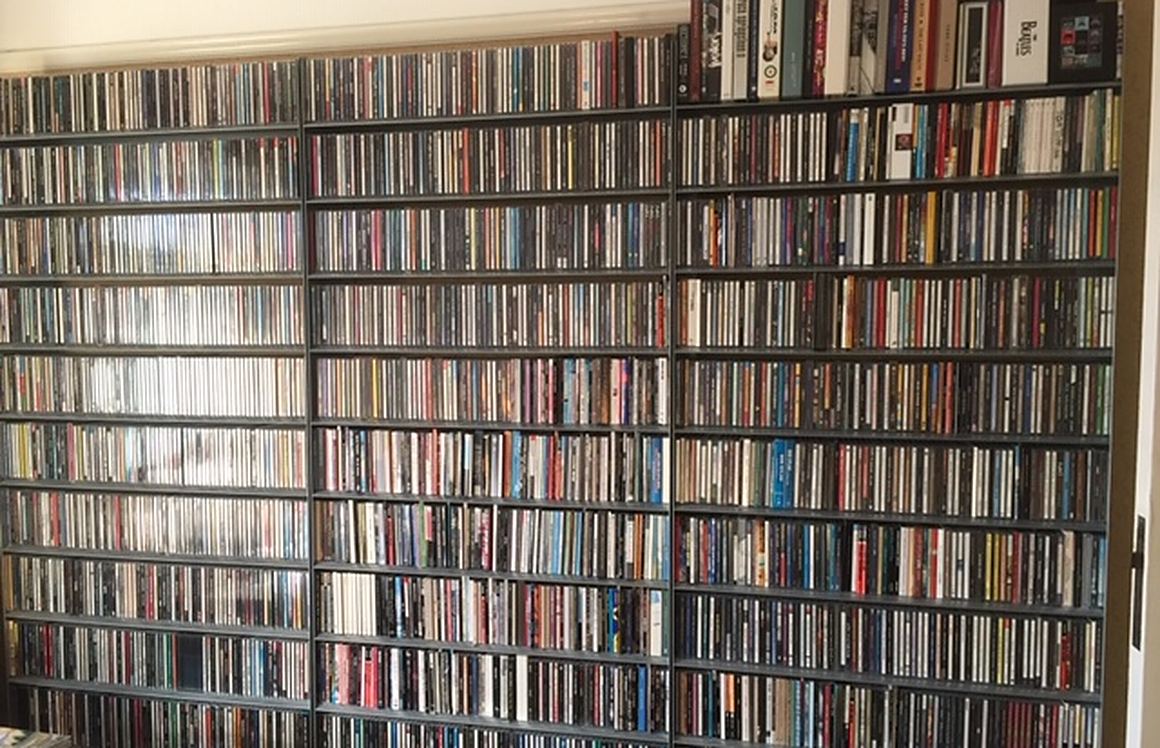
A music library that cannot disappear when a licensing agreement changes.
Which brings us to the part of this we actually live in. Nearly all of the coverage is about new CDs bought at retail, often as merchandise. The used market is a different animal, and it is where the ownership argument stops being abstract. A used disc costs very little, it is permanently yours, and in a great many cases it holds music you cannot get any other way at all. We will come back to that.
Why Do People Think CDs Sound Bad?
Ask around and you will hear some version of the same thing. CDs are digital, digital is cold, vinyl is warm and analog and real. It is close to received wisdom at this point.
The trouble is that it blames the format for something the format did not do.
A standard CD holds 16 bit, 44.1 kHz audio. That covers the entire range of human hearing, roughly 20 Hz to 20 kHz, with about 96 dB of dynamic range, and more than that once noise shaping is applied. A record, by comparison, often lands somewhere around 55 to 70 dB in real world playback, though that varies a good deal with the pressing, the cartridge and the rest of the chain. Records also have physical constraints that have nothing to do with taste: low bass is often summed to mono so the stylus can track it, high frequencies get tamed to keep the cutting head alive, distortion rises as the groove spirals toward the label, and the disc wears a little every time you play it.
On paper it is not close. The CD wins comfortably. So why did so many CDs genuinely sound harsh?
The First CDs Did Not Help Their Own Case
There are actually two answers to that question, and the older one came first.
If your introduction to the format was during the longbox years of the 1980s, some of those early discs really did sound rough. The problem was never that 16 bit audio could not reproduce the music. It was that the record industry was suddenly trying to move decades of analog recordings onto a brand new format, and nobody had settled yet on how to do it properly.
In plenty of cases labels did not go back to the original master tape at all. Bob Ludwig has described the practice directly: the source used for the CD master was often an equalized copy that had already been through the mastering console for vinyl, because clients did not want to pay for a separate CD master. That copy carried decisions made for the physical realities of a record rather than a disc. As Ludwig put it, you could end up with increased brightness in the songs toward the inner diameter of an LP, and bass centered to optimize LP loudness and trackability. Perfectly sensible choices for cutting a lacquer. Meaningless on a CD, and audible.
Other transfers ran through aging tape machines or early digital hardware that was primitive by the standards of even a few years later. The result could be CDs that sounded thin, bright, flat or just plain wrong next to the record people already owned.
Some early discs also used pre-emphasis, which boosts the high frequencies during mastering and relies on the player to reverse the boost on the way out. It works fine when everything behaves as designed. Play or rip one of those discs without the matching de-emphasis, which is easy to do on a computer, and it will sound spectacularly harsh through no fault of the disc.
None of which means early CDs were uniformly bad. Some of the best sounding CDs ever pressed came out of exactly this period, often precisely because they were transferred with very little processing and escaped what came later. Collectors seek those pressings out now for that reason. And the industry got better at it quickly: Ludwig points to Dire Straits' Brothers in Arms in 1985, the first CD to outsell its own vinyl edition, as the moment the format's acceptance turned.
But the damage to the reputation had started. And then the loudness war arrived and handed people a completely different reason to blame the compact disc.
The Loudness War, Not the Format
The reason a lot of CDs from the mid 1990s through the late 2000s sound flat and fatiguing is mastering, not digital audio. Records were being mixed and mastered progressively louder to stand out on radio and in CD changers, and the way you make something louder is by compressing and limiting it until the quiet parts and the loud parts are nearly the same size. Squash a recording hard enough and it stops breathing. You feel it as harshness and listening fatigue.
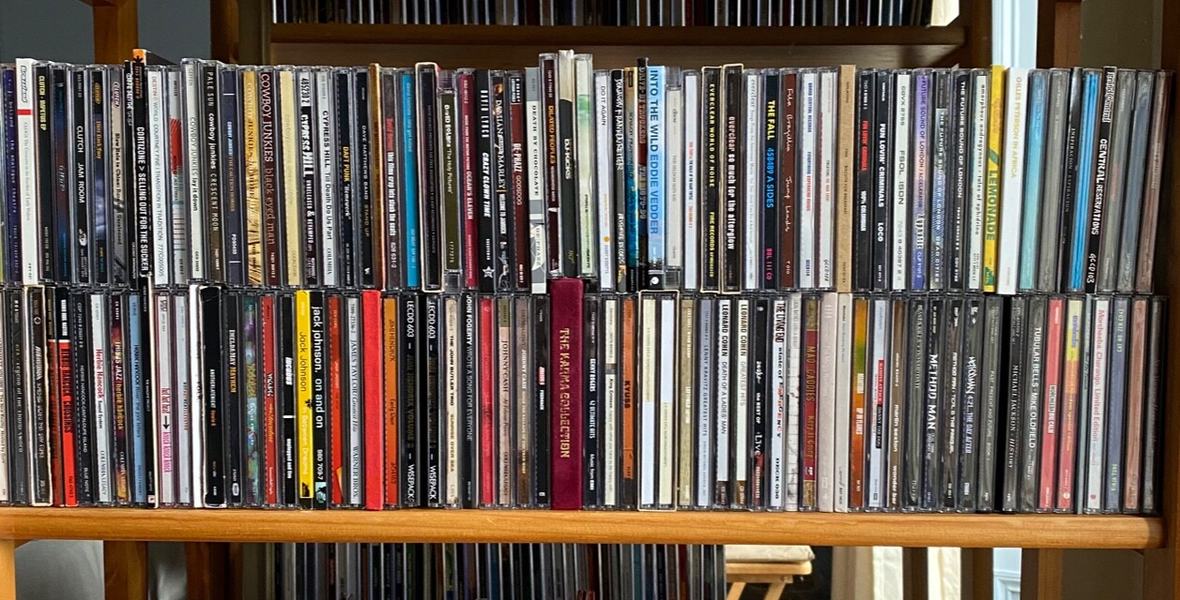
Most of the discs blamed for sounding bad came out in a fifteen year window when everything was mastered too loud.
Now here is the part that explains much of the misunderstanding. Vinyl has physical constraints that digital does not, and a heavily clipped master can cause real problems at the cutting stage, sometimes needing significant level reduction before it can be cut at all. That is not universal, and it is worth being clear about it: plenty of records are cut straight from the same digital master used for the CD. But it does mean some releases from that era ended up with a more dynamic master on vinyl than the one that went to disc.
People compared the two, heard a real difference, and put it down to the format. In many cases what they were hearing was a mastering difference as much as a format difference.
There is a well known listening test that speaks to this directly. Meyer and Moran's 2007 paper in the Journal of the Audio Engineering Society inserted a 16 bit, 44.1 kHz conversion loop into high resolution playback and found that listeners could not reliably detect it at normal listening levels. That is one study answering one narrow question rather than the final word on listening tests, but it does suggest the CD standard itself is not the bottleneck people assume it is.
Step back and the pattern is hard to miss. The compact disc took the blame twice for decisions made upstream of it. First for rushed catalog transfers in the 1980s, then for crushed mastering in the 1990s and 2000s. Two entirely separate problems, neither of them a limitation of the format, both of them remembered as "CDs sound bad."
So Do CDs Sound Better Than Vinyl?
Neither format is inherently better. The master is what you are actually hearing. A well mastered CD will beat a poorly cut record, a well cut record will beat a crushed CD, and in most cases where the mastering is comparable, the difference is far smaller than people expect.
We should be upfront about our own bias here. We run a vinyl only radio show, Above the Clouds Radio, and have for eight years. So take this in the spirit it is meant. This is not an argument that digital beats analog. We just do not think the compact disc deserves the reputation it got.
And if you simply prefer the sound of records, that is not a mistake to be corrected. Vinyl has a character, some of it from the mastering and some of it from the medium itself, and preferring it is a legitimate preference. Plenty of people like it precisely because it is not perfectly transparent. That is fine. It is just a different claim from saying CDs cannot sound good.
The Music You Still Can't Hear Anywhere Else
For a surprising amount of music released from the 1990s into the early 2000s, the CD is not an alternate format. It is the only surviving release.
This is the part that matters most to us, and it is the reason we pay attention to CDs at all. We see it from an unusual angle, because collections come through here constantly, and the interesting material is almost never the part the seller is proud of.
The 1990s and early 2000s were the compact disc's era in a way that is easy to forget. By the late 1990s vinyl had fallen to roughly one percent of US music sales. Labels were not pressing records because almost nobody was buying them. If you were an independent band on a small label in 1996, you pressed a thousand CDs and that was your entire physical release. There was no vinyl run. There was never going to be one.
An enormous amount of music from that period exists on compact disc and nowhere else. Not on vinyl, because it was never pressed. Frequently not on streaming either, because the label folded, or the rights got tangled, or nobody ever bothered to license a record that sold four thousand copies thirty years ago. The reissue boom has covered the albums with a guaranteed audience. It has not come close to covering the rest.
Some of the places this shows up most:
- Independent and underground rock from roughly 1992 to 2005. Small label runs, regional scenes, bands that toured for a few years and stopped.
- Death metal, black metal, grindcore and hardcore. These scenes were overwhelmingly CD and demo tape driven for well over a decade. A fraction of it has been reissued on vinyl. Most has not.
- Underground and regional hip-hop. Independently pressed, sold locally and at shows, often in tiny quantities.
- Latin, Caribbean and international music. Especially records made for a local market rather than an export one, which describes a great deal of what circulated through South Florida.
- Local and regional artists generally. The band from your city that made one good album in 1998 almost certainly made it on CD only.
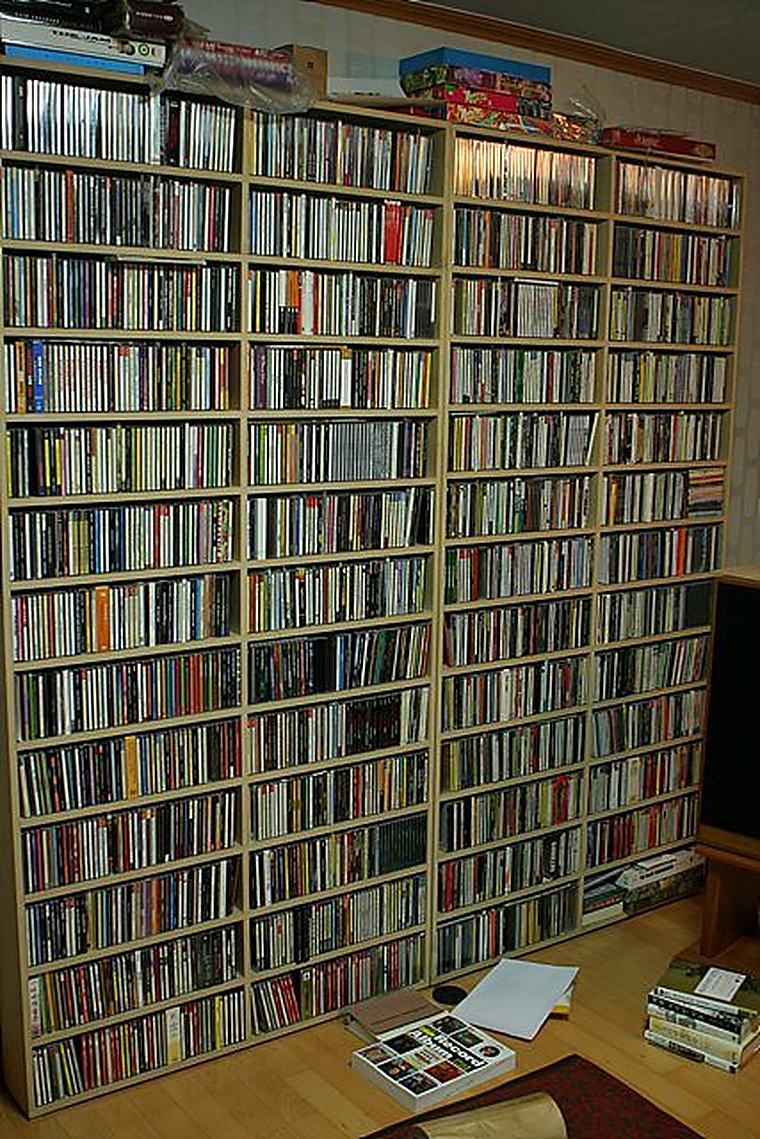
Collections this size almost always hold a few titles that were never pressed on vinyl and never made it to streaming.
For this music, buying the CD is not a nostalgic gesture or a collector's affectation. It is the only way to hear it at all.
How to Tell If Something Was Ever Pressed on Vinyl
If you want to check whether an album exists in another format, Discogs will tell you in about fifteen seconds. Search the album, open the master release page, and look at the list of versions, which shows the known pressings by format and year. Keep in mind it is a database built by contributors, so coverage of obscure regional releases is good but not guaranteed complete. If the only entries are CD and cassette, the album most likely never had a vinyl run, and any vinyl copy you come across later is probably a reissue or an unofficial pressing rather than an original.
It is a useful habit for two reasons. It tells you when a used CD is genuinely the only option, and it is the same lookup that tells you whether a disc sitting in your own collection is worth something.
What This Means If You Have CDs in a Closet
Most people reading this are on one of two sides of it. Either you are thinking about buying CDs again, or you have several hundred of them in a closet and you have been wondering for years whether to bother keeping them.
If it is the second one, the short version is that they are probably worth more than you assume and less than you hope. Bulk common discs are still cheap, and a rising sales chart has not changed that. But collections in the genres above hold real value, individual standouts can be worth a great deal on their own, and demand for good used CDs is moving in the right direction for the first time in about fifteen years. We wrote up the specifics of what CDs are actually worth and which discs are worth the most money, including the details that separate a collection worth selling from a box worth donating.
The single worst outcome is the one we see most often, which is somebody throwing out or donating a collection without ever finding out. It costs nothing to ask. We buy CD collections throughout South Florida, we will tell you honestly if yours is not a fit, and if you have vinyl mixed in with it, we buy that too.
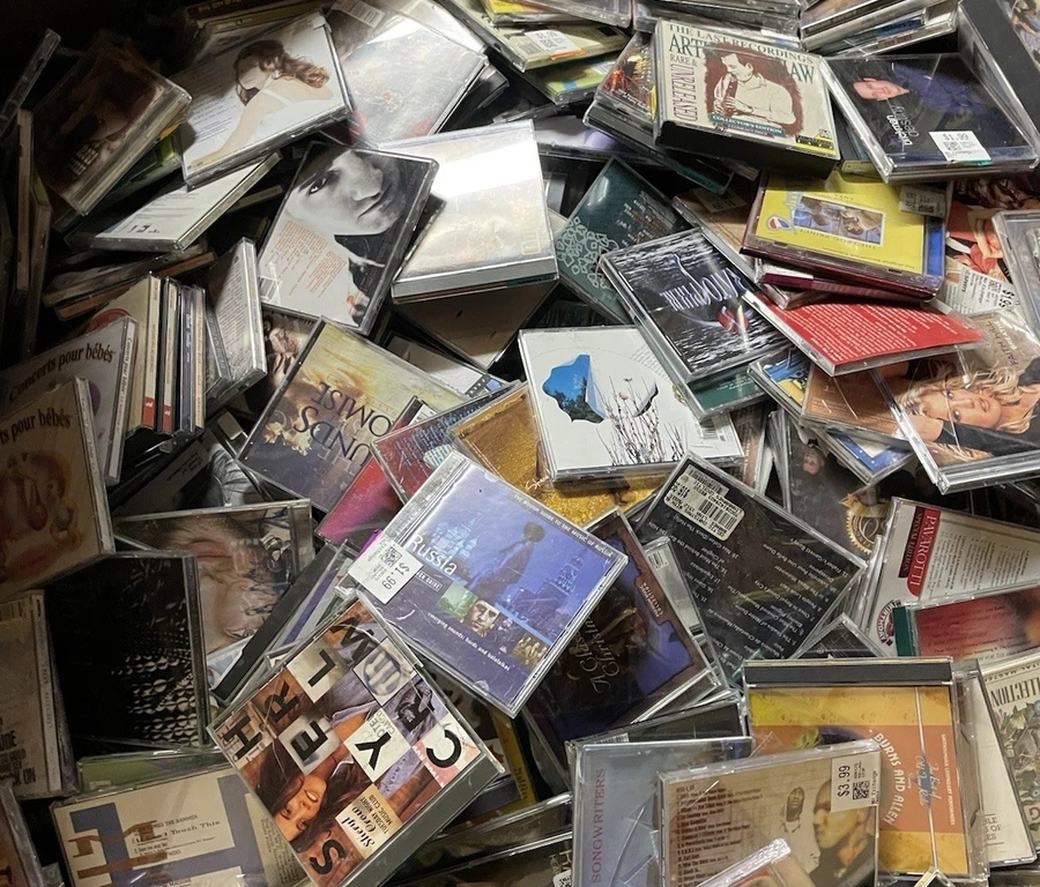
Worth checking before it goes to the curb.
The compact disc spent twenty years as the format nobody defended. It got blamed for mastering decisions it did not make, dismissed as the boring option between vinyl and streaming, and quietly kept hold of a huge amount of music that never made it anywhere else. The numbers finally turning is a decent excuse to give it another look. The music that only lives there is the better one.